Our work in India


News from India
Mobile teams

India

In India, the estimated population of donkeys is about 1.85 million. We have been working there since 1998, and now work from five centres - Delhi, Ahmedabad, Gwalior, Sikar and Solapur.

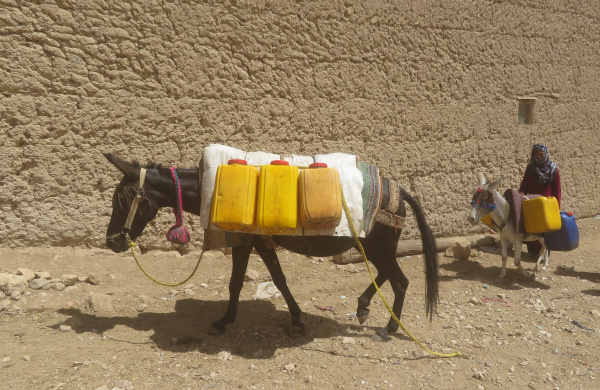
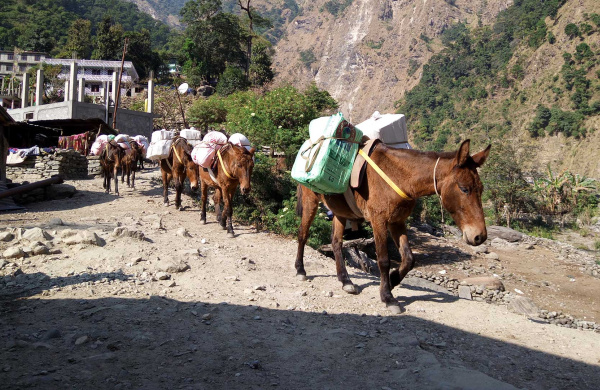
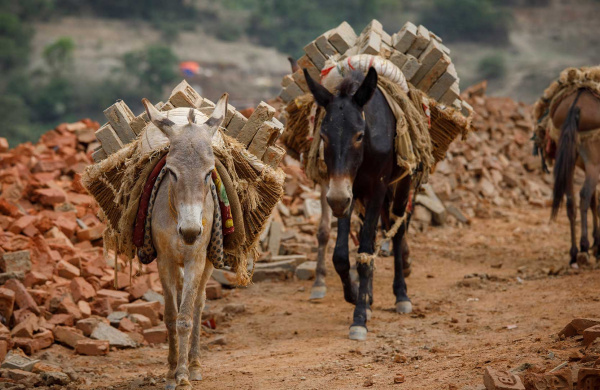
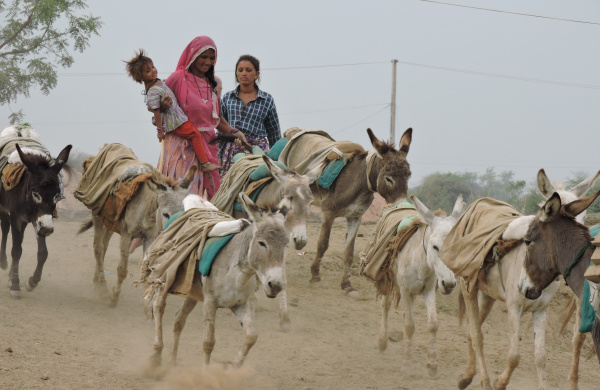
As in many of our other countries of work outside Europe, many donkeys and mules provide support to families in their everyday tasks such as carrying food, water or goods to market. In some situations they are also used more intensively. For example, with India's economy booming, donkeys work alongside some of the poorest people in Indian society as labourers in the construction industry - carrying bricks, sand and other heavy supplies.

These donkeys and mules work with small family groups. In some places, entire families migrate with their donkeys to areas where there is building work or brick making. They live on site in makeshift tents. Some children work, some look after the babies, and some help care for the donkeys outside work hours.

The families are contracted at the start of the building season and are under great pressure to deliver specific quantities of work each day, but earning only a meagre wage. As a result the donkeys are often overworked and overloaded.

In other places donkeys pulling carts in towns provide the delivery service for markets. The carts carry anything and everything, but are almost always heavily laden. The harness is rarely well fitted, maintained or in good condition and some donkeys may end up working constantly with open sores.

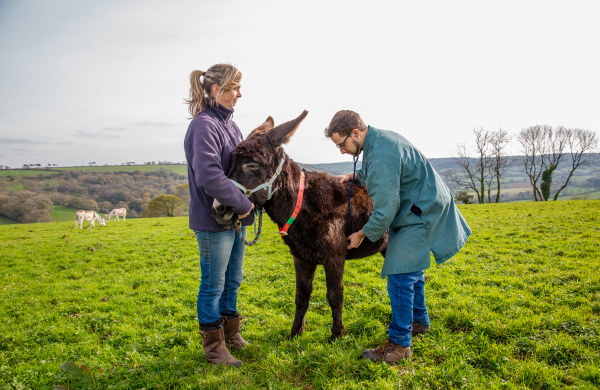
We work to improve the conditions of all these donkeys. On our regular visits, we provide routine veterinary care. Working with owners to improve their harness is also a hugely important part of our work. However in the long term we want conditions to improve. So we also provide education and training to the donkey owners, engage with the site or market owners to improve conditions for the donkeys, and try to include anyone already providing services to the donkeys in an area. We try to make our visits a ‘Sanctuary from Suffering’ for the donkeys and enjoyable for the owners and their children - all their lives are hard.

In all our working locations, we find out the main problems that affect the donkeys. We then work with the donkey owners to design a program that will make a difference. This usually includes some harness work, some clinical work and training and education.

In addition, we take every opportunity to raise the profile of donkeys - to influence the next generation of vets, teachers, donkey owners and the general public to respect and look after donkeys better.

On top of this, wherever possible our teams also deal with emergency call outs. There are always more to do, and unfortunately more donkeys in need.

Donkey power reduces women's poverty in line with Millennium Development goals

Tagged:  
Woman and donkey in Bangladesh

This International Women’s Day (March 8th), an international animal welfare charity is celebrating its role in a successful project, enabling a group of very poor women in Bangladesh to increase their income using donkey power.

From anonymity to affection – the story of Manu

Tagged:  
Manu

Earlier this year I visited The Donkey Sanctuary’s team based in New Delhi, India. My only experience of working donkeys before my trip had been seeing traditional beach donkey rides in the UK, so I was particularly keen to see the work that the charity does to help India’s hard-working animals and their owners.

Donkey owning communities in India do care

Tagged:  
Brick kiln donkey grazing

My recent visit to India was something I will never forget. Not only was it my first experience of a country and culture so different from my own - it was also the first time I’d seen for myself the amazing work our Indian team do every day, and the people they are helping.

During the last two decades India’s economy has been one of the fastest-growing in the world, propelled by rapid scientific and technological progress and the increasing globalisation of many industries. Towering steel and glass office blocks now dominate the skylines of many cities, accommodating branches of multi-national companies as well as India’s own booming IT, media and communications enterprises. Luxury hotels cater for tourists and business visitors, and huge shopping malls overshadow the old bazaars and markets. Yet a recent study has found that there are more poor people in eight states of India than in the 26 countries of sub-Saharan Africa.... and it is the ‘poorest of the poor’ who labour, with their donkeys, to build these modern-day monuments to consumerism and leisure.

Unlike the fully mechanised building sites in the Western world, those in India still use donkeys as well as the more modern machinery. Whole families are employed by contractors and sub-contractors to work for months at a time in the brick kilns and building sites, migrating from their villages to live in makeshift camps. Their donkeys are used to transport heavy loads of bricks or other building materials, often slung across their backs with inadequate or wrongly-positioned padding.

In India we have bases in four cities, New Delhi, Ahmedabad, Gwalior and Solapur. Each has a mobile unit offering veterinary treatment and advice, and an education/community development officer who runs education programmes in schools near the brick kilns and construction sites as well as on those sites themselves, along with workshops for adult donkey owners. We have an additional project in the state of Rajasthan.


About our work

The Donkey Sanctuary began working with the Indian charity People For Animals in 1998 and went on to set up the Donkey Sanctuary India (DSI) in 2002, a charity registered in India with its own board of trustees. After starting with a rented office and mobile clinic based in Gurgaon (an area of Delhi), we now have bases in New Delhi, Ahmedabad (Gujarat state), Gwalior (Madhya Pradesh state), Sikar (Rajasthan state) and Solapur (Maharashtra state). We also have a small farm used for training purposes next to the Ahmedabad office. The teams in each base visit a variety of sites, mainly brick kilns and building sites, to carry out veterinary and community education work; education officers also visit schools and run group sessions for child employees at the working sites. Delhi has five veterinary staff and an education/community development officer; Ahmedabad has five veterinary staff and an education officer; Gwalior has two vets and an education officer; Solapur has one vet and education /community development officer, and Sikar currently has just two veterinary staff.