Our work in Ethiopia


News from Ethiopia
Mobile teams

Ethiopia

We have been working in Ethiopia since 1986 when we forged a working partnership with the University of Addis Ababa's Faculty of Veterinary Medicine in Debre Zeit, situated 30km south of Addis Ababa.

We have a busy donkey hospital to provide more extensive treatment to sick donkeys and mules. It is equipped with an operating theatre, laboratory and recovery stables. Approximately 250 donkeys are admitted each year. The hospital is also used as a training centre for donkey owners, vets and farriers.

Our hospital holds clinics twice a week and it is not unusual for our teams to see up to 1,000 donkeys in one day. Owners are also able to bring their donkeys in for emergency treatment at any time.

Two mobile clinics operate in a 150km radius of Debre Zeit, visiting donkeys and owners too far away to visit the hospital.

In the north of Ethiopia, two mobile clinics operate in a 100km radius of Bahir Dar (Amhara) and Mekele (Tigray). In the south, our most recently established mobile clinic operates in a 100km radius of the Southern Nations, Nationalities and Peoples Region.

In the heart of Merkato Market, Addis Ababa, a new stationary clinic is providing a source of veterinary aid to some of the hardest working equines in the country. It is also being used as a training centre for their owners.

The Donkey Sanctuary launches a new training project that will help Ethiopia’s working donkeys

Tagged:  
Alage College Launch March 2013

International animal welfare charity The Donkey Sanctuary has recently launched a new five year project in Ethiopia that will see ‘donkey welfare’ on the training agenda of the country’s national veterinary service.

Home for Christmas; a donkey for my wife

Tagged:  
Donkey waiting for treatment at a local government clinic in Ethiopia

I am flying back home to my family and The Donkey Sanctuary in Sidmouth. It has been a long 5 weeks visiting our projects in Ethiopia and Egypt but I am returning happy knowing the projects are progressing well. During this time we held a workshop with our overseas vets as well as two of our vets from the UK, in the veterinary faculty near Addis.

Donation will save Ethiopian mules from suffering

Tagged:  
Mule being treated for EZL

One of the most serious diseases affecting mules and horses in Ethiopia is Epizootic Lymphangitis (EZL). It’s a contagious fungal disease which leads to abscesses along the legs and body. In our clinic in Bahir Dar where mules are commonly used to pull carts, several cases are seen each week.

Map of Ethiopia

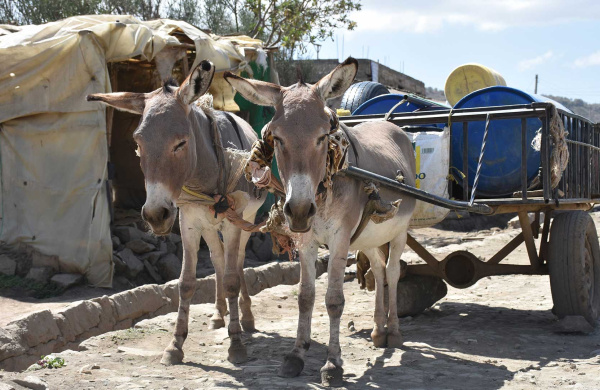
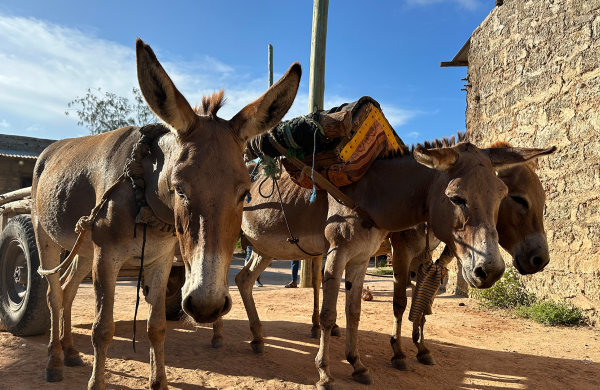
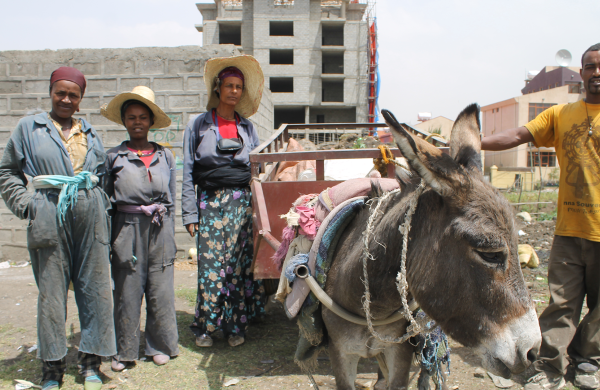
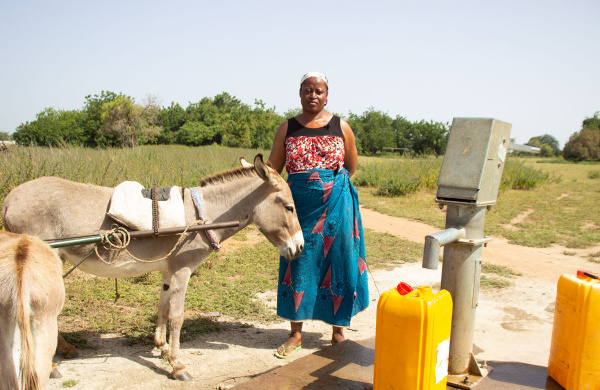
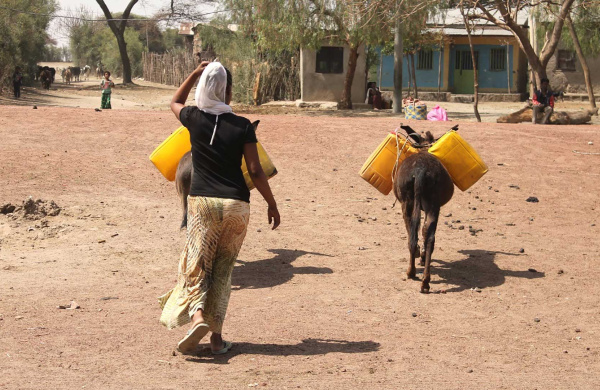
Ethiopians have a saying: “A man without a donkey, IS a donkey”. In the rural areas which make up 85% of the country, donkeys are used for collecting a family’s fresh water supply, working on the farm, carrying produce and goods to and from markets - all the basic activities that support people’s day-to-day lives. Donkeys carry large bales of firewood, sacks of grain, charcoal and building materials including timber, bricks, sand and blocks of cement – which are frequently strapped to a makeshift pack saddle with little or no padding or protection, maybe just some thin sacking or rugs. It’s not surprising that, underneath the saddles, most pack donkeys have large, ulcerating sores and other nasty harness wounds.

Much of our work in Ethiopia involves demonstrating the benefits of proper pack saddles and working with donkey owners to find ways of modifying their own designs, using cheap, locally-available materials. We also encourage them to appreciate their hard-working donkeys more and give them proper food and water, shelter and veterinary care. We have four regional bases: in Debre Zeit near the capital Addis Ababa, Bahir Dar in Amhara, Mekelle in Tigray, and Hawassa in the SNNPRS region, and our teams provide veterinary treatments and harness-making sessions, while also advising and educating donkey owners of all ages, and training the Government vets and animal health workers already based within the communities.


About our work

The Donkey Sanctuary established links with the Addis Ababa University’s Faculty of Veterinary Medicine in Debre Zeit near the Ethiopian capital Addis Ababa in 1986, providing funding for jointly-agreed projects to improve donkey health and welfare. The first mobile clinic began visiting the surrounding area in 1994, and in 1999 a new donkey clinic was built in the grounds of the Veterinary Faculty compound providing operating theatres, laboratories and training facilities. Since then the Ethiopia operation has expanded into the Amhara region in the north-west of Ethiopia, the Tigray region in the north, and the SNNPRS (Southern Nations, Nationalities and Peoples’ Regional State). We now have seven vets, two education/extension officers and a harness maker based at Debre Zeit, and an additional clinic at the nearby Merkato Market. We also have a vet and assistant, education/extension officer and harness/pack saddle maker in each of the three other regions. Our work takes staff to different locations including markets, watering-points, vet clinics, schools and farmers’ training centres; the teams who visit will vary according to the combination of vet/education/harness work needed.