The Donkey Sanctuary - Educate


subjects & topicsScienceOurselvesSc 2 Life processes and living things


Key 1 - Science

Key Stage 1 - Science
Ourselves
Sc 2. Life processes and living things


Topics for discussion.
Suggestions for relevant materials/apparatus.
Photographs.
Worksheets.
Colouring sheets.
Teacher information sheets.

Resource Library...
Sc 2. Life Processes and living things

Quick Links:
Life Processes
Humans and other animals
Variation and classification
Living things in their environment


Life Processes  
Programme of Study 1a Resources
The differences between things that are living and things that have never been alive. Provide plant, plastic cup, newspaper (objects made from living material) and cut flower (once lived) for discussion.

Worksheet A: Tick and cross - living things/things that have never lived.
Programme of Study 1b Resources
That animals, including humans, move, feed, grow, use their senses and reproduce. Discuss: Life Processes.

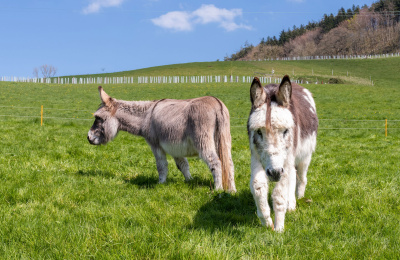
Photographs of donkeys to compare with photographs of children.


Worksheet B (i): Make a moving person.

Worksheet B (ii): Make a moving donkey.

Worksheet C: Donkeys love these foods. Do you?

Worksheet D: The Secret of the Sticky Sandwich. Growing Timeline of pictures foal, yearling, adult, oldie to compare with baby, child, adult, grandparent (See resources for POS 2g)

Activity: Run, walk, skip, hop, kick.
Programme of Study 1c Resources
To relate life processes to animals and plants found in the local environment.

Grow cress to observe life processes in plants.

Discuss: Life Cycle of a tree/ frog / donkey / human.

Worksheet E: Match the adult to the baby.

Worksheet F: Sort the creatures – Pet, wild, farm.


Humans and other animals  
Programme of Study 2a Resources
To recognise and compare the main external parts of the bodies of humans and other animals. Observe: drawings themselves/photographs.

Observe: drawings of donkey/poster.

Mirrors to observe and compare features with peers.

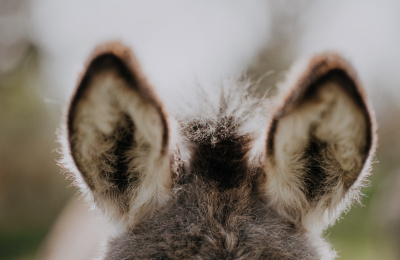
Compare differences and similarities eg hand/hoof, hair/coat, ears, eyes. 

Information sheet 1 Why do donkeys have a cross on their back?

Worksheet G: Label parts of the body.

Worksheet H: Label parts of the donkey.
Programme of Study 2b Resources
That animals, including humans, move, feed, grow, use their senses and reproduce. List/Graph/Poster/examples of children’s favourite foods. Examples of hay, grass etc.

Colour sheet 1: Donkey eating

Colour sheet 2: Wheelbarrow of apples and carrots.

Information sheet 2: Donkey Sanctuary notes on feeding.

Worksheet I: Tick the human and donkey food. Which has two ticks?

Why humans and donkeys eat different foods?  Why do humans and animals enjoy treats?  Donkeys enjoy them too, polo/ginger biscuits.
Programme of Study 2c Resources
That taking exercise and eating the right types and amounts of food help humans and animals to keep healthy.

Provide equipment and opportunity to exercise. How does it affect our body and why is this good for us?

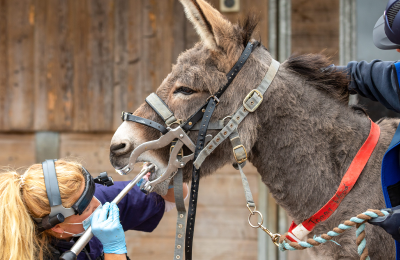
Discuss: healthy teeth, oral hygiene, visits to the dentist and losing milk teeth.

Photograph: of donkeys, fat/thin.


Photograph: Sam the young donkey with clean teeth.


Photograph: Russell the older donkey with longer, dirty teeth.


Photograph: of beach donkeys exercising and resting.


Information sheet 3: Donkey teeth.

Worksheet J: Tick and cross the good food and bad food.

Programme of Study 2d  Resources
About the role of drugs as medicines.
 Discuss: what happens when we feel unwell or have an accident.
 
 
Discuss: a visit to the doctor/hospital. Safe use of medicines, only prescribed medicines.


Common ailment. Compare head lice with sweet itch.
 
 
Programme of Study 2e Resources
How to treat animals with care and sensitivity.
Discuss: what makes a child feel happy? Who looks after them?

 
Discuss: how they care for their pets. What makes a donkey happy?


 Programme of Study 2f Resources
That humans and other animals can produce offspring and that these offspring grow into adults.
Children to provide family photographs/baby/adult.
 
 
Programme of Study 2g  Resources
About the senses that enable humans and other animals to be aware of the world around them.
(See resources for POS 1b )
Provide a ‘feely bag' with variety of textures, rough, smooth, hard, cold etc. Use these words to describe a donkey's coat, nose etc.
 
Provide a tape of sounds including a donkey braying.
 
Describe the sounds loud, soft, high, low. Do we find them frightening or happy?


Variations and classifications  
Programme of Study 4a Resources
Recognise similarities and differences between themselves and others. To treat others with sensitivity. Observe: drawings themselves/photographs.

Sort children into sets by hair/eye colour.

Discuss: likes/dislikes. Favourite activities at school.

Photographs of Alberto and Peanuts.


Information sheet 9:
EST.

Information sheet 10: Donkey care.
Programme of Study 4b Resources
Group living things according to observable similarities and differences. Discuss: Life Processes.

Discuss: Can a donkey do these activities?

Worksheet O: Cut out each animal and sort into groups.

Information sheet 11: Types of Donkey.


Living things in their environment  
Programme of Study 5a, b, c Resources
Find out different kinds of plants and animals in the environment. Identify similarities and differences between environments and how that affects animals and plants. Caring for the environment. Walk, observe and discuss local environment.

Compare country/town/coastal/city life.

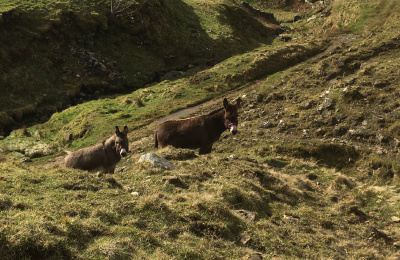
Photographs: donkeys in different environments.


Worksheet P: Where would the donkey like to live?

Discuss: pollution/ noise/ overcrowding/ loss of habitat. How are humans/animals/plants affected?


Information sheet 12: Ragwort.

grey rule

Print PagePrint Page | AAA


subjects & topics |our aims |resource library |feedback form
Copyright © 2008 The Donkey Sanctuary | Terms and Conditions | Developed by Rokk Media
www.thedonkeysanctuary.org.uk