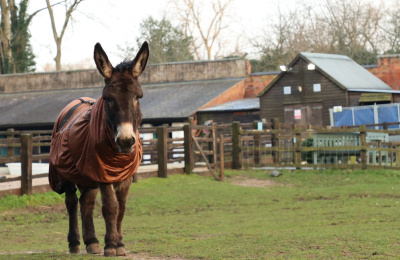

Two donkeys who were relinquished into our care more than seven years ago are now enjoying the next stage of their life in the loving care of a Donkey Guardian home.
Peppercorn, 11, and Sherwood, eight, made the move to Guardian Linda’s home in Cheshire in May this year, just in time for summer.
The pair was relinquished into the care of The Donkey Sanctuary in 2016 as part of a larger group of 21 donkeys and made the move to our Devon-based Paccombe Farm in January 2021.
After being identified as a bonded pair, our Farms team became concerned at how Peppercorn and Sherwood were affected by fly bites.
Emily Francis, our Farms Equine Coordinator, says: “Peppercorn and Sherwood were a pair of inquisitive friendly donkeys who showed great potential to benefit from the love and attention of a Guardian home.
“They were struggling at Paccombe with the flies and were becoming very irritated by them.
“Peppercorn in particular reacted badly to the bites. The decision was made that both donkeys would benefit from an environment with less fly risk.
“We knew both donkeys loved the attention they received from their grooms, so we were confident that they would thrive from the one-on-one care offered to them via a Guardian home.”
Sherwood and Peppercorn were matched with Guardian Linda, based in Cheshire, and made the move to her home in May.
Linda says: “When they arrived, the donkeys walked in and immediately made themselves at home! I was astounded at how quickly they became comfortable.
“They were eating, drinking and rolling – all the behaviour that a donkey shows when they are settled. Peppercorn is the vocal one and brays when he wants attention.
“I expected both donkeys to be shy at first, but they came up to me and my husband Nigel right away."
Even though Sherwood and Peppercorn have only lived with Linda for a short time, she says it's as if they were ‘always with us’.
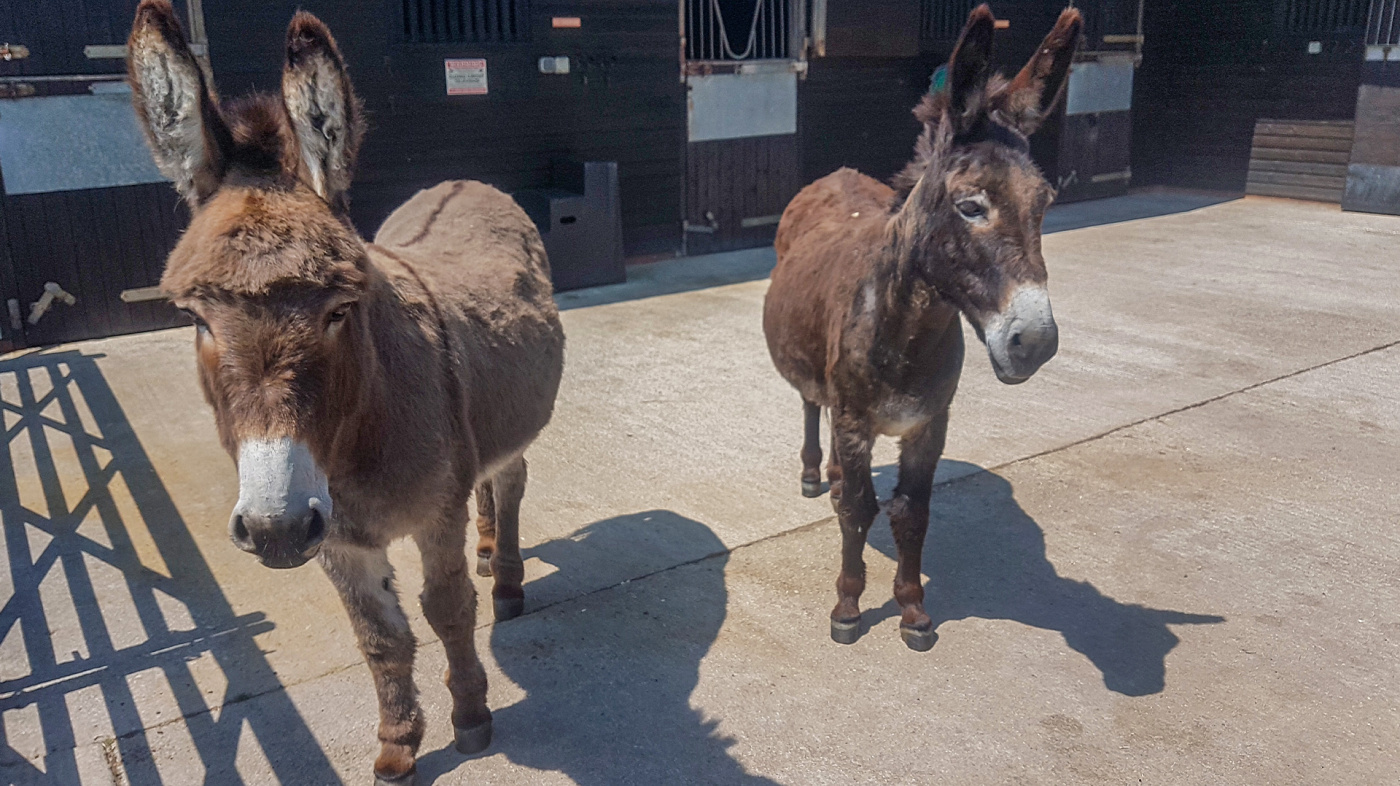
She adds: “They’re super donkeys and settled in straight away. They have great fun together and are always side by side.
“Whether they’re mutually grooming each other or standing nose to tail under the eaves of the stable, they are never out of each other’s sight.
“We really adore them, and we have got to know them very quickly. We can’t imagine life without them!”
We are delighted that Sherwood and Peppercorn have settled so quickly to life in Cheshire, and we look forward to seeing how they continue to progress with Linda and Nigel.
Emily adds: “Linda has previous equine experience, having owned a donkey before. We thought she would be the perfect match for the boys, with her previous experience and willingness to learn and get things right from the outset.
“The whole team are so pleased these two fabulous boys have found an amazing home with Linda, and both donkeys and humans are getting so much from the love, care and attention on offer.”